Divorce by mutual agreement

Dr. Dorottya Farkas, LL.M., attorney-at-law in the office

Professional support for divorce

During divorce, we help you avoid prolonged and costly court back-and-forth, and we also help ensure that the divorce petition is properly submitted to the court. This way, your case can be concluded quickly and smoothly before the court. We prepare the settlement in a form acceptable to the court, draft the divorce petition to be filed with the court, and in the case of property division we provide full legal assistance, including the preparation of property agreements.

Former spouses shake hands in court after divorce.

Division of assets, child custody

The goal is divorce by mutual agreement. During the meetings, we address the issues of property division, child custody, and child support. At these sessions, we work so that instead of hostility, you can cooperate with your former partner during the process and after the divorce as well. This is especially important when there is a shared child, as the parents must cooperate in the child’s best interests. Of course, as attorneys we also represent clients in litigation before the court, but such representation can only be started as a separate matter.

A sliced wedding cake – a symbol of divorce

Benefits of divorce mediation

In divorce mediation, we keep discussions on a calm track and take both parties’ interests into account. The procedure is far less expensive than litigation that can drag on for years. The parties have greater control over decisions, because in a court lawsuit the court does not decide over your heads. Divorce through mediation is significantly faster than traditional court proceedings. The goal is a balanced settlement that resolves all essential issues and provides a stable basis for cooperation even after the divorce.

Dr. Dorottya Farkas countersigns the agreement.

Fast divorce—within a single hearing

In certain cases, divorce can be granted quickly—even within a single hearing. The marriage may be dissolved at the first hearing if the court’s reconciliation attempt (which is conducted ex officio in every case) is unsuccessful, and no minor child was born of the marriage, or if the child is already an adult and the parents have agreed on child support. It is important that the mediation settlement and the petition are submitted to the court in the proper form.

Revenue stamp

Costs of divorce litigation

Without mediation, the itemised current court fee for starting divorce litigation is shown on the Fees page under the “Other fees” section. This must be paid by the party initiating the divorce (the claimant) using a revenue stamp affixed to the first page of the petition. The good news is that if the parties prove to the court that they participated in mediation, this fee may be reduced by as much as half. In every case, the judge decides on this.

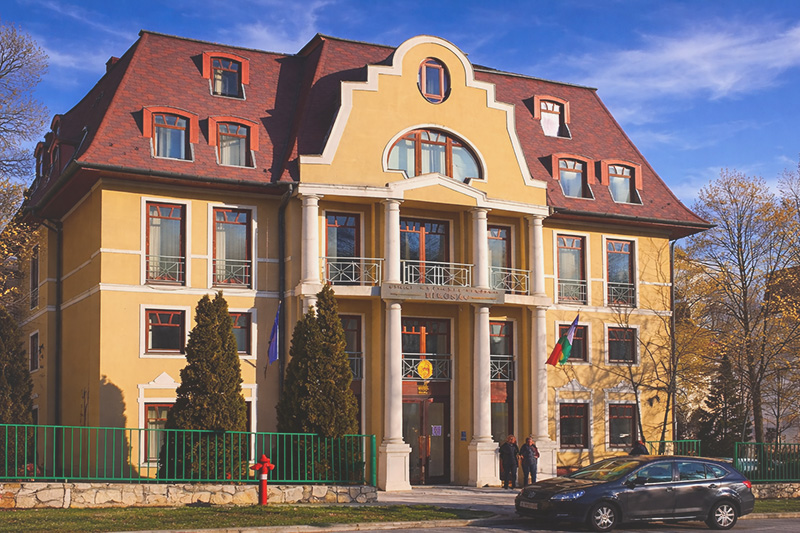
Steps and columns of a courthouse building

Types of divorce

In divorce by mutual agreement, the reasons leading to the breakdown are not examined. This is a great relief for the parties. In a less favourable scenario, the court proceeds with a “fact-based divorce”, where an evidentiary procedure must be carried out (for example, hearing witnesses). In divorce mediation, we strongly aim for divorce by mutual agreement.

Facing divorce? We can help.

  • Through mediation, you can agree on dissolving the marriage by mutual agreement.
  • With a mediator’s help, you can reach a settlement where neither party feels like a loser.
  • Divorce mediation helps you cooperate after the divorce as well, if necessary (for example, because of the children).
  • Mediation is much faster and more affordable than litigation. Contact us with confidence.
Book an appointment

Steps of divorce mediation

  • The spouses contact the mediator.
  • The mediator holds separate one-on-one consultations with each spouse.
  • Holding a joint mediation session.
  • Bringing positions closer on disputed divorce-related issues.
  • Agreement on ancillary matters – divorce by mutual agreement.
  • Putting the settlement in writing by the mediator.
  • Completing the divorce petition form.
  • Submitting the petition + mediation settlement to the court.
  • The court sets the first hearing date and ultimately approves the settlement.

Process overview

Submission to the court

  1. Preliminary information
  2. Preliminary information
  3. Mediation session
  4. Agreement
  5. Settlement in writing
  6. Drafting the petition
  7. Submission to the court
  8. Court hearing

Submitting a divorce to the court – filing the petition

Divorce—the divorce lawsuit—starts with submitting the petition to the competent court. The petition must show whether the divorce is by mutual agreement, or whether the parties request divorce with the reasons for the breakdown being examined. If there is a mediation settlement between the parties, they submit the settlement signed by the mediator together with the petition.

The court sets the hearing date within 1–3 months and summons the parties. The party initiating the divorce (the claimant) must appear before the judge. At this reconciliation hearing, the parties must state whether they maintain their intention to divorce. If they do not, the judge terminates the proceedings.

If the parties decide to divorce, they indicate this orally to the judge, who issues a judgment and dissolves the marriage. If a minor child is also involved, the judge sets a second hearing date, where the divorce of the couple with children is pronounced.

What must you necessarily agree on in a divorce by mutual agreement?

  • Exercise of parental responsibility
  • Contact between the child and the parent living separately
  • Child support (if there is a shared child)
  • Spousal maintenance (if requested)
  • Use of the spouses’ common home

We help you complete the petition

Divorce by mutual agreement – divorce mediation


Our Civil Code allows the use of a mediator during divorce— either by the parties’ own choice or often ordered by the judge, for example in proceedings aimed at arranging parental responsibility.

The guardianship authority may also order mediation to support the parents’ cooperation. The goal is divorce by mutual agreement and the peaceful resolution of conflicts. The settlement reached in divorce mediation is then incorporated into the court’s judgment.


Book an appointment

Divorce hearing without an attorney in the courtroom

courthouse building At the hearing, there are usually three people present in the courtroom—if the parties arrive without attorneys: the judge and the spouses (still married at that time).

The judge (typically a female judge) then records that everyone who is involved in dissolving the marriage has appeared at the scheduled hearing, so both the defendant and the claimant are present. The judge then asks whether it will be a divorce by mutual agreement, whether anyone claims litigation costs, whether anyone requests spousal maintenance, and whether those present (in a consistent, identical declaration of intent) request the dissolution of the marriage.

The next step is that the judge verifies the personal data shown on the identity card and address card with each party. It is an important rule of courtroom etiquette that if the judge asks us a question in the courtroom, we always answer standing.

Court questioning – what may the judge ask?

  • Was a child born of the marriage? (If yes: name, place and date of birth.)
  • What is your highest level of education?
  • What is your occupation?
  • Name and address of your workplace?
  • Your average monthly net income?
  • Do you own real estate? (If yes, the address.)
  • Are you currently in a cohabiting partnership with someone?
  • When did the marital cohabitation end definitively and in all respects between you?
  • Did you marry the defendant/claimant based on emotional attachment?
  • Before the marriage, after how many years of knowing each other did you move in with the defendant/claimant?
  • How long did you live in a cohabiting partnership before the marriage?
  • Where did you live?
  • Until when did you feel your marriage was good?
  • Do you wish to reveal the reasons for the breakdown of the marriage?
  • Who ended the cohabitation? Who moved out? (If you already live separately.)
  • Was there an attempt at reconciliation between you, and did it succeed?
  • Is your intention to divorce well considered and firm?

With mediation and well-prepared documents, the hearing is typically shorter, and the risk of unexpected obstacles is lower.

Have a question? We can help.

Map

Reviews

5.0 Google reviews 48 reviews
Here you can read previous reviews related to our mediation work—and you can also leave your own rating.

Legal practice

Contact details